
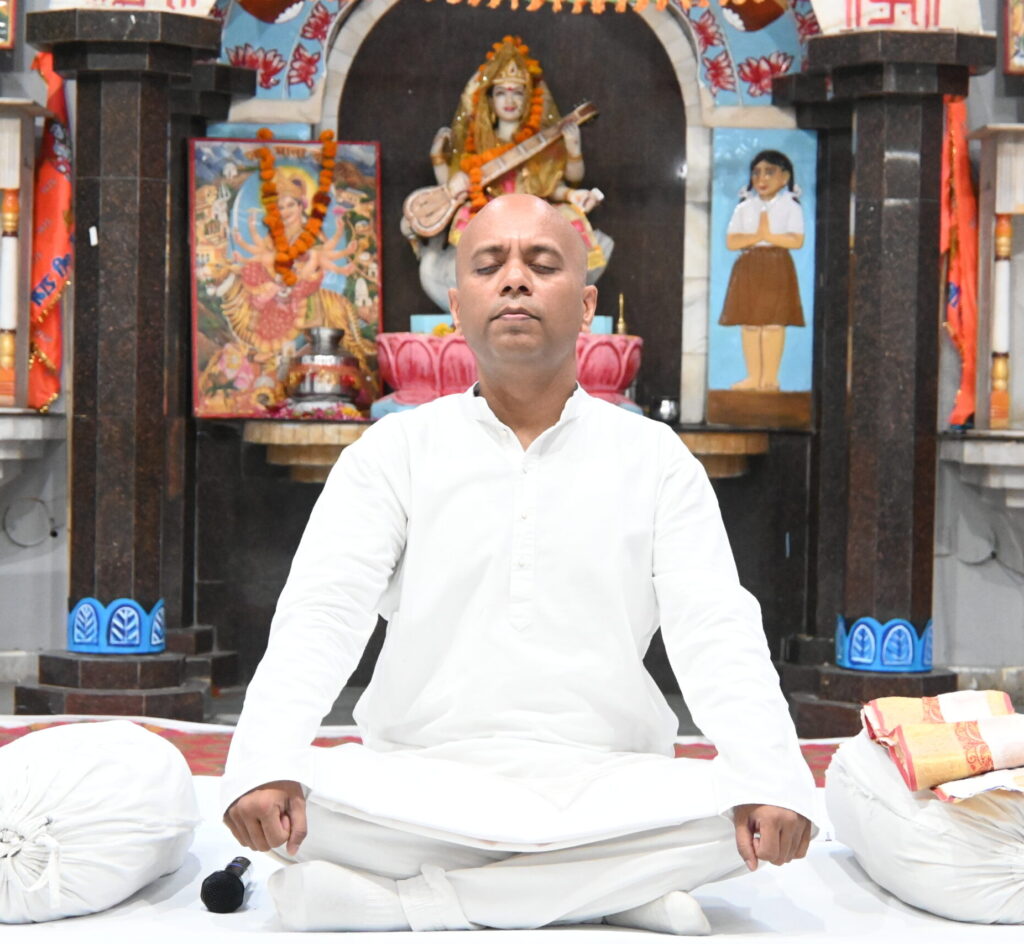
Meditation is taught here as a trainable skill with observable effects — not an escape from
problems, but a way to meet them with a steadier mind.
Beginner’s Meditation The problem: You’ve tried meditating before, felt awkward or restless,
and gave up assuming it wasn’t for you. The teaching: A realistic starting point — how to sit,
how long, and what to actually expect (including that a wandering mind in the first weeks is
normal, not failure).
Concentration The problem: You sit down to focus on one task and find your attention
scattering within minutes, pulled toward notifications, thoughts, anything else. The teaching:
Simple concentration exercises that train your attention the way exercise trains a muscle —
gradually, with repetition, not through force.
Awareness The problem: You react to situations — an irritating comment, a stressful moment
— before you’ve even registered what you’re feeling. The teaching: Practices for noticing a
thought or emotion as it arises, creating a small gap between feeling something and acting on it.
Breath Practices The problem: In a stressful moment, your body reacts faster than your
thinking does — tight chest, racing heart, a mind that won’t slow down. The teaching: Specific
breathing techniques used to calm the nervous system directly, giving your mind a chance to
catch up before you respond.
Managing Stress The problem: Stress isn’t a one-time event for most people — it’s constant,
low-grade, and hard to switch off even outside of work. The teaching: Meditation applied as a
real-time tool, not just a morning ritual — something you can use in the middle of a hard day, not
only in a quiet room.
Daily Meditation Habits The problem: You’ve started a meditation practice more than once and
quietly let it drop within a few weeks. The teaching: Realistic routines and honest reasons
people quit — plus practical ways to build consistency without turning it into another obligation
you resent.
Mind Observation The problem: You feel like your thoughts control you more than you control
them — worry loops, replaying conversations, overthinking decisions. The teaching: A more
advanced practice of watching thoughts arise and pass without immediately reacting to or
believing every one of them.
Mudra
The problem: You sit down to meditate but your mind stays restless, and you’re looking for
something physical to help anchor your attention besides just the breath.
The teaching: Mudras — specific hand positions used during meditation and pranayama — are
explained here not as symbolic gestures, but as simple physical anchors that help settle the
nervous system and direct focus inward. A few basic mudras, when and how to use them, and
what they’re actually meant to support.