
Author name: rudrayogi50@gmail.com

Rudrayogi – Ancient Wisdom Applied to Modern Life
Meditation

Meditation

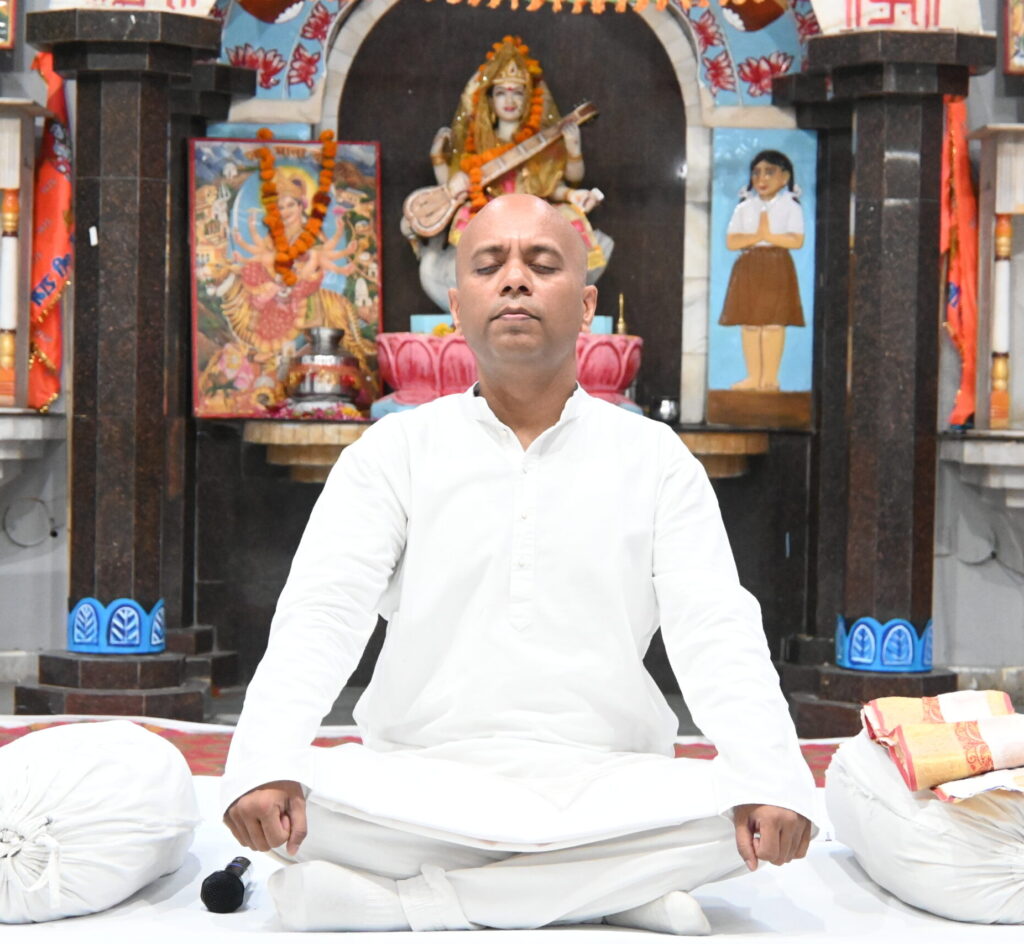
Meditation is taught here as a trainable skill with observable effects — not an escape fromproblems, but a way to meet them with a steadier mind.Beginner’s Meditation The problem: You’ve tried meditating before, felt awkward or restless,and gave up assuming it wasn’t for you. The teaching: A realistic starting point — how to sit,how long, and what to actually expect (including that a wandering mind in the first weeks isnormal, not failure).Concentration The problem: You sit down to focus on one task and find your attentionscattering within minutes, pulled toward notifications, thoughts, anything else. The teaching:Simple concentration exercises that train your attention the way exercise trains a muscle —gradually, with repetition, not through force.Awareness The problem: You react to situations — an irritating comment, a stressful moment— before you’ve even registered what you’re feeling. The teaching: Practices for noticing athought or emotion as it arises, creating a small gap between feeling something and acting on it.Breath Practices The problem: In a stressful moment, your body reacts faster than yourthinking does — tight chest, racing heart, a mind that won’t slow down. The teaching: Specificbreathing techniques used to calm the nervous system directly, giving your mind a chance tocatch up before you respond.Managing Stress The problem: Stress isn’t a one-time event for most people — it’s constant,low-grade, and hard to switch off even outside of work. The teaching: Meditation applied as areal-time tool, not just a morning ritual — something you can use in the middle of a hard day, notonly in a quiet room.Daily Meditation Habits The problem: You’ve started a meditation practice more than once andquietly let it drop within a few weeks. The teaching: Realistic routines and honest reasonspeople quit — plus practical ways to build consistency without turning it into another obligationyou resent.Mind Observation The problem: You feel like your thoughts control you more than you controlthem — worry loops, replaying conversations, overthinking decisions. The teaching: A moreadvanced practice of watching thoughts arise and pass without immediately reacting to orbelieving every one of them.MudraThe problem: You sit down to meditate but your mind stays restless, and you’re looking forsomething physical to help anchor your attention besides just the breath.The teaching: Mudras — specific hand positions used during meditation and pranayama — areexplained here not as symbolic gestures, but as simple physical anchors that help settle thenervous system and direct focus inward. A few basic mudras, when and how to use them, andwhat they’re actually meant to support.

Bhagavad Gita

BHAGAVAD GITA

The Bhagavad Gita was written as a conversation between a confused, doubting person and acalm, clear voice of guidance — which is exactly the situation most people find themselves in atsome point. Here, it’s taught the same way: as a way to think through the moments where duty,emotion, and ambition all pull in different directions.Purpose & Dharma The problem: You’re doing well on paper — career, responsibilities,expectations met — but something still feels hollow, or you’re not sure you’re doing the rightthing for the right reasons. The teaching: The Gita’s idea of dharma isn’t about following a fixedscript — it’s about identifying your actual role and responsibility in a given situation, and actingfrom that, rather than from ego, fear, or what others expect. Purpose becomes something youclarify through honest self-assessment, not something you wait to discover.Karma & Responsibility The problem: You’re anxious about outcomes — a result you can’tcontrol — and that anxiety is making it harder to actually do the work in front of you. Theteaching: The Gita’s teaching on karma separates effort from outcome: do your part fully andhonestly, and let go of gripping the result. This isn’t passivity — it’s a way to stay focused onwhat’s actually in your hands, instead of burning energy on what isn’t.Emotional Balance The problem: A situation — a conflict, a loss, a big decision — has left youoverwhelmed, and you can’t think clearly enough to act. The teaching: The Gita opens withArjuna paralysed by grief and doubt on a battlefield. Krishna’s response isn’t to dismiss theemotion, but to guide him back to clear thinking without suppressing what he feels. The practicaltakeaway: steadiness isn’t the absence of emotion, it’s not being ruled by it in the moment thatmatters.Leadership The problem: You’re responsible for other people’s outcomes — a team, a family, aproject — and the pressure of that responsibility is making decisions harder, not easier. Theteaching: Krishna’s guidance to Arjuna is fundamentally a leadership conversation — how tomake a hard call, own the consequences, and act decisively without losing compassion for thepeople affected by the decision.Decision Making The problem: Every option in front of you feels partly wrong, and you’re stuck,not because you lack information, but because you lack a way to weigh what matters. Theteaching: The Gita offers a framework for decisions that isn’t just “logic vs. emotion” — it weighsduty, likely consequence, and conscience together, giving you a structured way to choose evenwhen no option is perfect.Relationships The problem: You’re caught between what you owe someone — a parent, apartner, a mentor — and what you feel you need for yourself, and the guilt or tension aroundthat is hard to sit with. The teaching: The Gita treats duty toward family, teachers, andcommunity as real and important, but never as something that erases your own responsibility toact with integrity. It offers a way to think about loyalty and boundaries together, instead oftreating them as opposites — you can honour a relationship without abandoning your ownjudgment.Self-Discipline The problem: You know what you should do — the healthier habit, the harderconversation, the disciplined choice — but you keep not doing it, and the gap between knowingand doing is its own source of frustration. The teaching: The Gita repeatedly returns to one idea:mastering your own mind is a harder and more important battle than any external one.Discipline here isn’t framed as punishment or willpower — it’s framed as a skill, trainedgradually, the same way you’d train any capability.

Scroll to Top